Visiting the Quintas:
Where the Wine Comes to Life
No wine guide to the Douro Valley is complete without the quintas — the family-run estates where winemakers actually make the wine. The ones I have curated for my groups, specifically, stand out for their authenticity and history.
At Quinta da Pacheca, you are stepping into a property with records dating to 1738. Picture the 18th-century heritage buildings, the granite lagares where workers still tread grapes by foot, and the wines poured in spaces that have been doing exactly this for generations. Overall, it’s a visceral connection to the tradition behind every bottle.
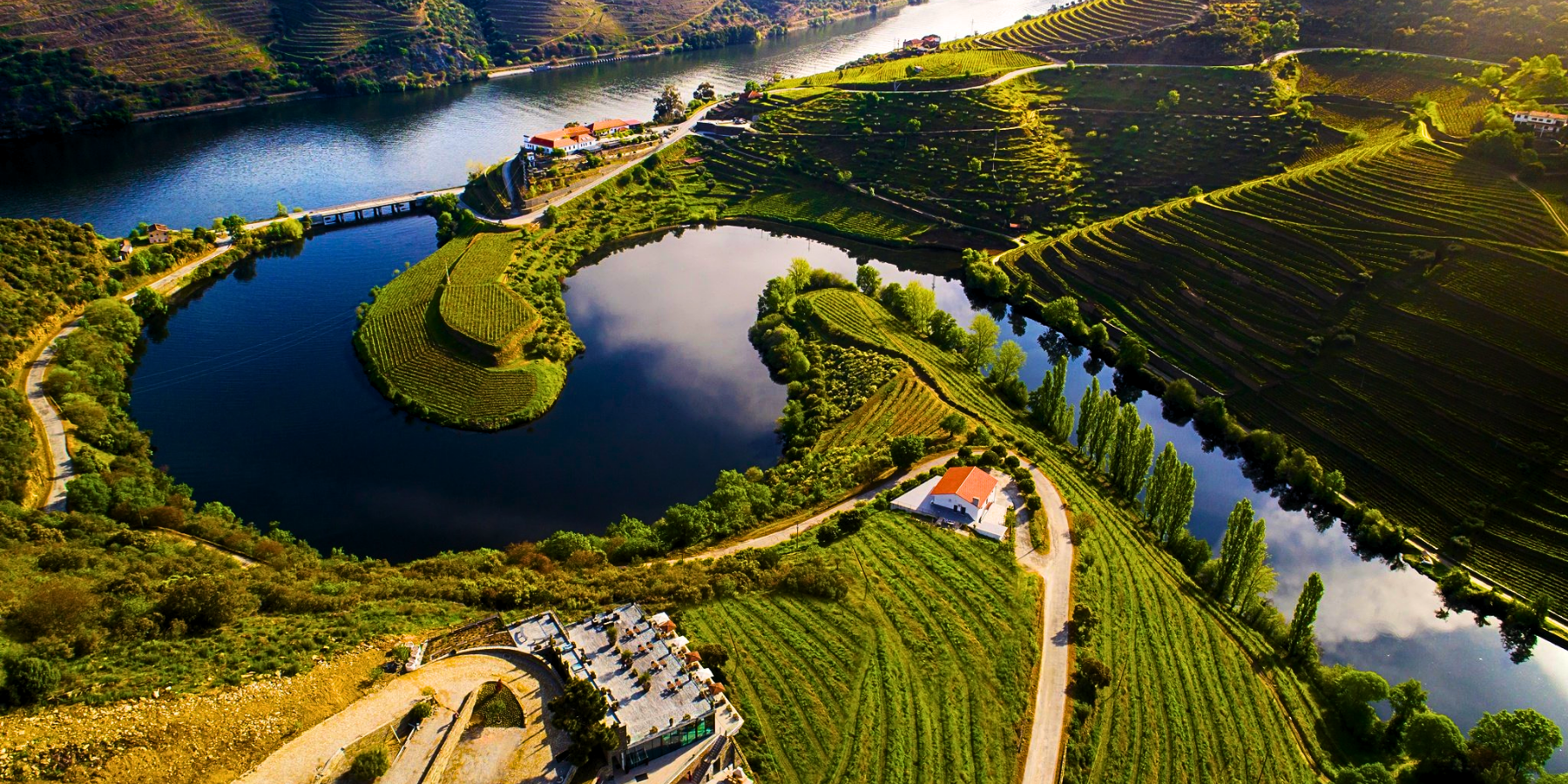
At Quinta do Bomfim, you walk the same terraced vineyards that have produced legendary Vintage Ports for over a century. The views alone — steep terraces dropping to the river, vines in every direction — make clear why this valley, ultimately, earned UNESCO World Heritage status.
What makes these visits different from a standard tourist tasting is the access. At these properties, you are not a visitor on a tour route. Instead, the family hosts you as a guest, in a place that still operates the way it always has.
Wine on a
Douro Valley River Cruise:
What to Expect
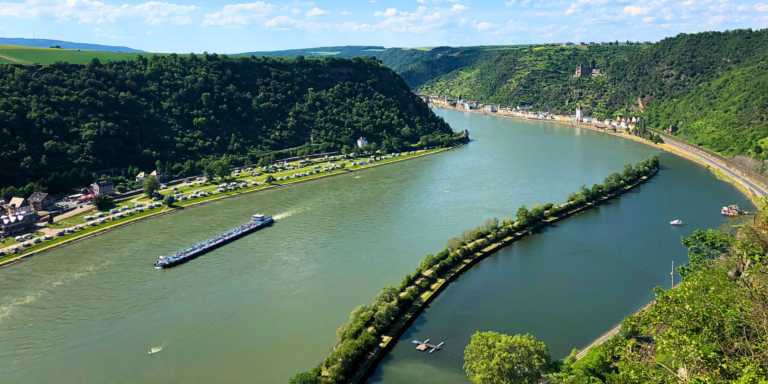
A river cruise through the Douro Valley is one of the best ways to experience the wine region, because the itinerary puts you directly inside it. First, you wake up moored alongside the vineyards and take excursions to the quintas in the morning. Then you return to the ship for a lunch paired with exactly the wines you just tasted.
Most Douro Valley river cruise itineraries include at least one dedicated wine estate visit. Meanwhile, the ship’s dining room features local Douro wines with meals throughout the sailing. The wine is, in other words, very much part of the journey, not a side note to it.
I have curated a Porto and Douro Valley itinerary that builds the wine experience into every day. Specifically, it runs from the tasting at the quinta to the glass you raise on the sun deck as the valley turns golden at dusk. My team, meanwhile, handles every detail, so you can simply show up and enjoy.
FAQ: Portuguese Wine and Port in the Douro Valley
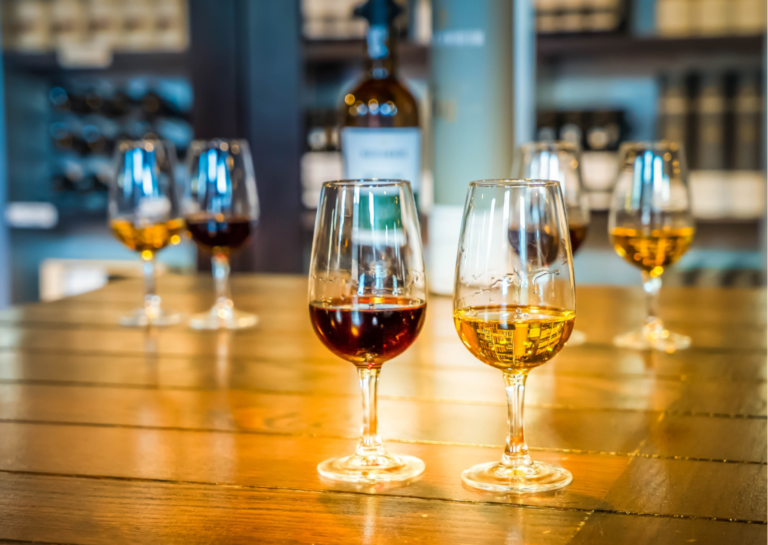
What is the difference between Ruby Port and Tawny Port?
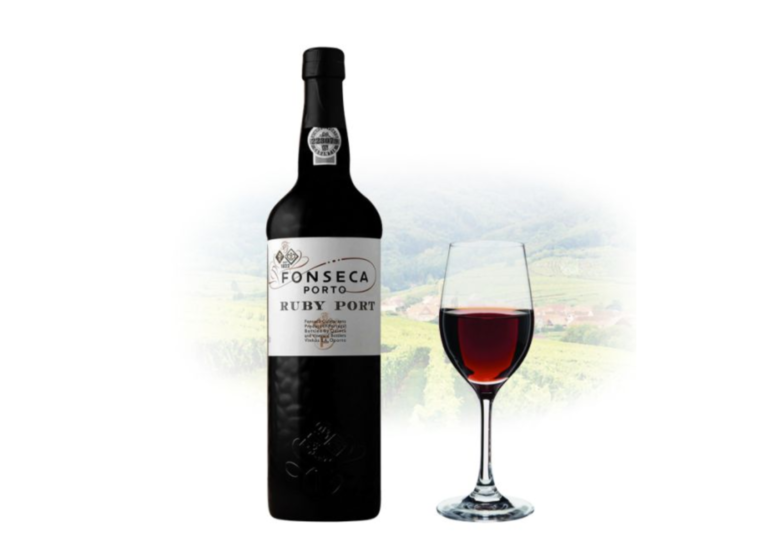
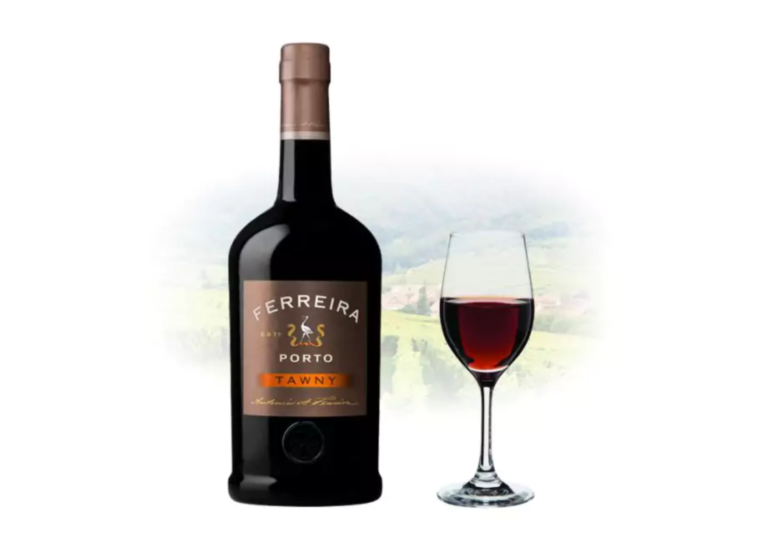
Producers age Ruby Port in large vats for a short time. As a result, that preserves its deep red color and fresh fruit flavors of blackberry, cherry, and plum. Producers age Tawny Port, meanwhile, in small wooden barrels for many years, which oxidizes the wine to an amber color and develops richer flavors of caramel, nuts, and dried figs. Ruby is bold and fruity; Tawny, however, is smooth, complex, and mellow.
What wine is Portugal most known for?
Portugal is best known internationally for Port wine, the fortified wine produced in the Douro Valley. Within Port, the most recognized styles are Ruby and Tawny. For table wines, specifically, Touriga Nacional is the signature red grape variety, producing full-bodied reds that have earned strong international recognition. Producers also widely export Vinho Verde, a light and slightly sparkling white from the northwest.
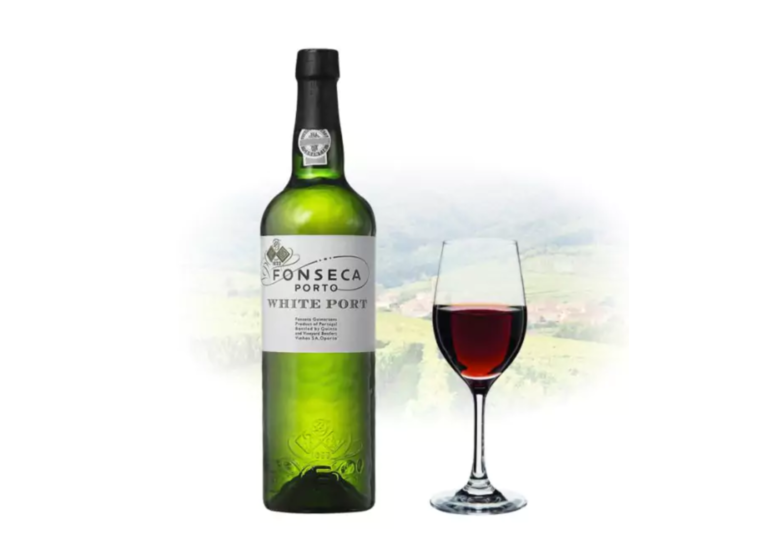
Is White Port a dessert wine?
Not necessarily. White Port ranges from very dry to quite sweet. In Portugal, however, people most commonly enjoy it as a Porto Tónico — mixed with tonic water, ice, and mint — as an aperitif or afternoon drink. The sweetest version, labeled Lágrima, works well as a dessert wine. The drier styles, though, are extremely versatile, and they’re far more common in local settings than most visitors expect.
Do Douro Valley river cruises include wine tastings?
Most do. Douro Valley river cruise itineraries typically include at least one excursion to a wine estate — often a quinta with historical significance. A guided tasting is, likewise, part of the visit. The ship’s dining room will also serve local Douro wines with meals throughout the sailing. Overall, it is one of the most wine-immersive river cruise destinations in Europe.
Ready to Experience the Douro Valley?
There is a moment that happens on every Douro Valley trip I host. It’s usually on the afternoon of the first or second day, somewhere between the quinta visit and dinner, when a traveler who was skeptical about wine says something like: “I don’t think I’ve ever actually tasted wine before. I just drank it.”
That, ultimately, is what the Douro does. The combination of the river, the vineyards, and the history in every glass creates something special. So, likewise, do the people who have been making these wines for generations — together they create a connection that generic wine tourism simply cannot replicate.
If you would like to talk through whether a Douro Valley river cruise is the right fit for your travel style, I’d love to help. I’m, therefore, happy to offer a complimentary consultation. My team handles every planning and booking detail. You simply arrive, then, with an open mind and a willingness to try the White Port.
I cannot wait to see you raising a glass as the sun sets over this beautiful valley.